Entry requirements published; international route unconfirmed
Funding
CAD 60,000 salary, CAD 6,000 meeting support and tuition paid; third-party funding is accepted but self-funding is not
Deadline
1 September 2026 (McGill PGME deadline for the majority of fellowship programmes, 2027-2028 academic year)
Duration
12 months
Hands-on
Unclear — confirm privileges
Clinical exposureHigh-volume Level I trauma with approximately 900–1,000 cases, including 70–80 pelvis and acetabular cases, complex articular and long-bone fractures, deformity correction, bone transport, teaching and publishable research
Participation levelClinical participation and hands-on restrictions must be confirmed directly with the host.
INTERNATIONAL APPLICANT CHECK
Can an international surgeon apply?
—Not published
International applicants
Domestic and international applicants may apply if they are fully trained and certified orthopaedic surgeons, or trauma surgeons specialising in orthopaedic trauma, and meet McGill postgraduate-medical-education requirements. Applicants should be fluent in English and/or French; provincial registration and work authorisation still require confirmation.
?Confirm directly with host
Clinical role
Clinical or combined training pathway; exact duties remain appointment-specific. Hands-on participation and operative restrictions are not explicitly published.
≈Partially published
Medical registration
Clinical participation requires the applicable provincial postgraduate or clinical-fellow registration and host-hospital credentialing.
✓Published by official source
Language
Applicants should be fluent in English and/or French. Daily hospital activity and most records are in English, while both English and French are accepted.
≈Partially published
Visa or work authorisation
International fellows must confirm work-permit and sponsorship arrangements with the host; COTS directory inclusion does not establish visa eligibility.
DATA QUALITY & AVAILABILITY93% of core application fields verifiedChecked 2026-10-08 · Next scheduled editorial review: 2027-04-01
✓ programme title✓ institution / department✓ city and country✓ programme classification✓ subspecialty✓ current status evidence✓ duration✓ positions✓ commencement / intake✓ funding✓ eligibility✓ international eligibility✓ language✓ registration✓ visa / work authorisation✓ deadline✓ application process✓ required documents✓ application portal✓ official contact✓ faculty✓ verified faculty photograph✓ verified institution logo✓ official source✓ institutional source✓ accreditation / organisation source✓ verification date— benefits · not published by the cited official source— accommodation / relocation · not published by the cited official source
APPLICATION TIMELINE & CONTACT
Plan the application
Application deadline1 September 2026 (McGill PGME deadline for the majority of fellowship programmes, 2027-2028 academic year)
Commencing date1 July following selection; the official page does not identify the intake year
Application route / cycleApplications via the McGill PGME online application (fee CAD 143.82); window for 2027-2028 opened 15 May 2026 and closed 1 September 2026 for most fellowship programmes; files sent to programme directors in September.
Copy of specialty certificate issued by a Board or College (proof of Medical Council of Canada or USMLE success may be accepted provisionally)
Three signed reference letters on institutional letterhead
Sponsorship / proof-of-funding letter (non-profit source; self-funding refused) stating salary and tuition
Attestation or confirmation of residency training from the programme director
MD diploma and Medical Council of Canada source verification (physiciansapply.ca)
PROGRAM OVERVIEW
What this program offers
McGill University Orthopedic Trauma Fellowship is one of 13 Canadian fellowship identities linked by the official COTS resource hub. Published programme-level facts are retained; current vacancy, licensing, funding and visa terms remain explicit gaps unless the linked university source states them.
Intended for: Fully trained orthopaedic surgeons seeking advanced Canadian trauma and post-traumatic reconstruction experience; university and provincial requirements apply
HOST INSTITUTION
About Montreal General Hospital / McGill University
McGill University's Division of Orthopaedic Surgery publishes an Orthopedic Trauma Fellowship based at Montreal General Hospital. Official McGill orthopaedics fellowship pages describe postgraduate trauma training within the McGill academic network; duration, funding and application timing remain on the division fellowship notice.
Associate Professor; Chief of Orthopaedic Surgery, Canadian Armed Forces
Affiliation
McGill University; Montreal General Hospital
Clinical focus
Orthopaedic trauma
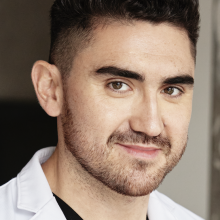
Max Talbot is an associate professor at McGill and Chief of Orthopaedic Surgery for the Canadian Armed Forces. His clinical work focuses on orthopaedic trauma.
Montreal, Quebec, Canada · 6 to 12 weeks (AO Trauma fellowship programme standard; host-specific placement length is set by the regional fellowship coordinator)View program profile →
Calgary, Alberta, Canada · 6 to 12 weeks (AO Trauma fellowship programme standard; host-specific placement length is set by the regional fellowship coordinator)View program profile →
Halifax, Nova Scotia, Canada · 6 to 12 weeks (AO Trauma fellowship programme standard; host-specific placement length is set by the regional fellowship coordinator)View program profile →
Toronto, Ontario, Canada · 6 to 12 weeks (AO Trauma fellowship programme standard; host-specific placement length is set by the regional fellowship coordinator)View program profile →
Help us understand which pages are useful. Google Analytics stays off unless you allow it. Declining does not affect access to OrthoFellow. Privacy policy