Selected catalogue fields; this score does not confirm eligibility or application readiness.Application evidence · 5 of 7 selected topics
Deadline
Published by official source
Funding
Not published
International eligibility
Published by official source
Registration
Published by official source
Language
Not published
Visa / work authorisation
Published by official source
Required documents
Published by official source
Faculty documentation: 3 individual profile sources linked. Photos and roster sources are assessed separately.
The count covers the topics above. Clinical privileges and your own eligibility require separate confirmation with the host.
DECISION SUMMARY
Key facts at a glance
Eligibility
Entry requirements published; check international conditions
Funding / fees
Funding, salary and benefits are not published on the Queen's lower-extremity fellowship objective PDF.Not published. Financial support may cover expenses; it does not establish employment or a salary.
Deadline
Canadian applicants: 31 December, 18 months before the July 1 start (i.e. 31 December 2026 for July 2028); international applicants: 31 July the year before the start (i.e. 31 July 2027 for July 2028)
Duration
1 year
Hands-on
Unclear — confirm privileges
Clinical exposureLower-limb reconstruction, arthroplasty, hip arthroscopy, osteotomies, hip resurfacing, large-volume arthroplasty and revision arthroplasty, partial joint replacement, research and resident/medical-student teaching.
Participation levelClinical participation and hands-on restrictions must be confirmed directly with the host.
INTERNATIONAL APPLICANT CHECK
Can an international surgeon apply?
≈Partially published
International applicants
Indonesian orthopaedic specialists should confirm home-country specialist evidence, provincial clinical-fellow registration, English requirements, funding sponsorship, malpractice coverage and Canadian work-authorisation steps before applying.
?Confirm directly with host
Clinical role
Clinical or combined training pathway; exact duties remain appointment-specific. Hands-on participation and operative restrictions are not explicitly published.
≈Partially published
Medical registration
Clinical appointment requires Queen's/Kingston Health Sciences Centre approval and Ontario clinical-fellow registration/credentialing.
—Not published
Language
English-language requirements are not published on the Queen's lower-extremity fellowship objective PDF; confirm with Queen's/Kingston Health Sciences Centre before applying.
≈Partially published
Visa or work authorisation
International applicants should confirm work-authorisation, CPSO registration and hospital credentialing directly with Queen's/Kingston Health Sciences Centre.
DATA QUALITY & AVAILABILITYField-by-field evidence and review datesChecked 2026-10-09 · Next scheduled editorial review: 2027-04-01
✓ programme title✓ institution / department✓ city and country✓ programme classification✓ subspecialty✓ current status evidence✓ duration✓ commencement / intake✓ eligibility✓ international eligibility✓ language✓ registration✓ visa / work authorisation✓ deadline✓ application process✓ required documents✓ application portal✓ official contact✓ faculty✓ verified faculty photograph✓ verified institution logo✓ official source✓ institutional source✓ verification date— positions · not published by the cited official source— Funding information not published · not published by the cited official source— benefits · not published by the cited official source— accommodation / relocation · not published by the cited official source— accreditation / organisation source · not published by the cited official source
APPLICATION TIMELINE & CONTACT
Plan the application
Application deadlineCanadian applicants: 31 December, 18 months before the July 1 start (i.e. 31 December 2026 for July 2028); international applicants: 31 July the year before the start (i.e. 31 July 2027 for July 2028)
Commencing dateJuly 1 annually
Application route / cycleAnnual July 1 start; Queen's Department of Surgery lists Orthopedic Surgery (Arthroplasty, Comprehensive Knee, Pediatrics, Sports, Trauma, Upper Extremity, Shoulder & Elbow, Hand & Upper Extremity) as currently accepting fellowship applications
Appropriately qualified Canadian or internationally trained orthopaedic surgeon
Letter of interest
Curriculum vitae
Preferred rotation choice
Application documents
Published by official source
Letter of interest
Curriculum vitae
Preferred rotation choice
PROGRAM OVERVIEW
What this program offers
A one-year Kingston lower-extremity fellowship in arthroplasty and hip arthroscopy with clear July 1 starts and separate Canadian/international deadlines. This addition makes Kingston a stronger indexable Canada fellowship city beyond trauma and upper extremity.
BENEFITS & SUPPORT
Published benefits and support
The official objective document publishes clinical, research and academic opportunities but no salary, leave, insurance or relocation package.
HOST INSTITUTION
About Queen's University / Kingston Health Sciences Centre
Queen's publishes a one-year lower-extremity fellowship directed by Dr. Aaron Campbell with faculty rotations under Dr. Harrison, Dr. Rudan and Dr. Wood.
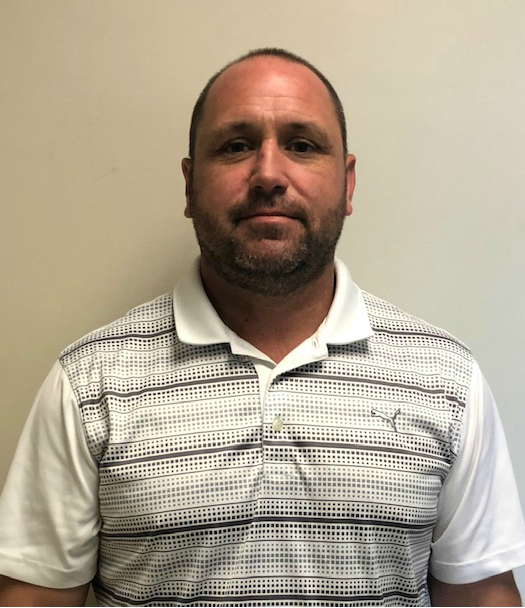
Fellowship supervisor / program leadershipIndividual profile linkedPhoto source linked
Position / status
Assistant Professor, Queen's University; attending orthopaedic surgeon, Kingston Health Sciences Centre; Surgical Clinical Fellowship Director
Affiliation
Queen's University / Kingston Health Sciences Centre
Clinical focus
Orthopaedic surgery with sports medicine and knee surgery fellowship training; research on anterior cruciate femoral tunnel technique and tibial slope measurement
Qualifications
Medical school, University of Saskatchewan; orthopaedic residency, Queen's University; Carleton sports medicine fellowship and knee surgery fellowship, University of Ottawa
Aaron Campbell is an Assistant Professor in the Department of Surgery at Queen's University and an attending orthopaedic surgeon at Kingston Health Sciences Centre. The university also lists him as Surgical Clinical Fellowship Director. He studied medicine at the University of Saskatchewan, completed orthopaedic residency at Queen's and undertook sports medicine and knee surgery fellowships in Ottawa. His stated research interests include anterior cruciate femoral tunnel technique and tibial slope measurement. His personal training history does not establish the entry requirements or current recruitment status of the associated fellowship.
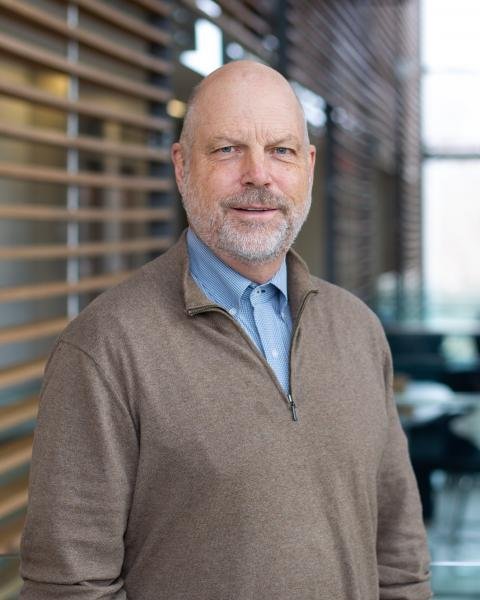
Professor and former Head, Department of Surgery, Queen's University; attending orthopaedic surgeon, Kingston Health Sciences Centre
Affiliation
Queen's University / Kingston Health Sciences Centre
Clinical focus
Computer-assisted orthopaedic surgery, total joint surgery, orthopaedic oncology
Qualifications
Medical degree and residency at Queen's University; Fellow of the Canadian Academy of Health Sciences
John Rudan is a professor and previous Head of the Department of Surgery at Queen's University and an attending orthopaedic surgeon at Kingston Health Sciences Centre. The department page states that he completed his medical degree and residency at Queen's University and was elected a Fellow of the Canadian Academy of Health Sciences. His clinical interests are computer-assisted orthopaedic surgery, total joint surgery and oncology. He is listed as Director, Research, and has been Senior Principal Investigator of the Human Mobility Research Centre since 2000. The intake, supervision and current availability of the linked fellowship must be confirmed with the host.
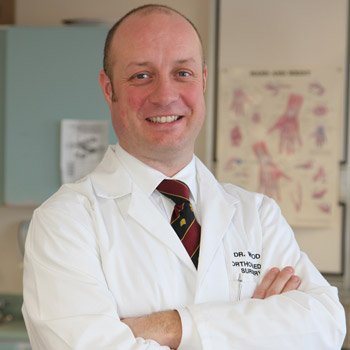
Appointment status: Previously at Queen’s University and Kingston General Hospital; his practice records a move to McMaster and Juravinski Hospital in December 2025.
Gavin Wood is an arthroplasty and reconstruction surgeon who joined McMaster University at Juravinski Hospital in December 2025 after working at Queen’s University and Kingston General Hospital.
Names and roles come from the cited programme source; photographs have their own cited source and do not establish an individual profile. Rosters may change.
Montreal, Quebec, Canada · Minimum 1 year (13 four-week periods); an optional second year for clinical research alongside a master's in biomedical sciencesView program profile →